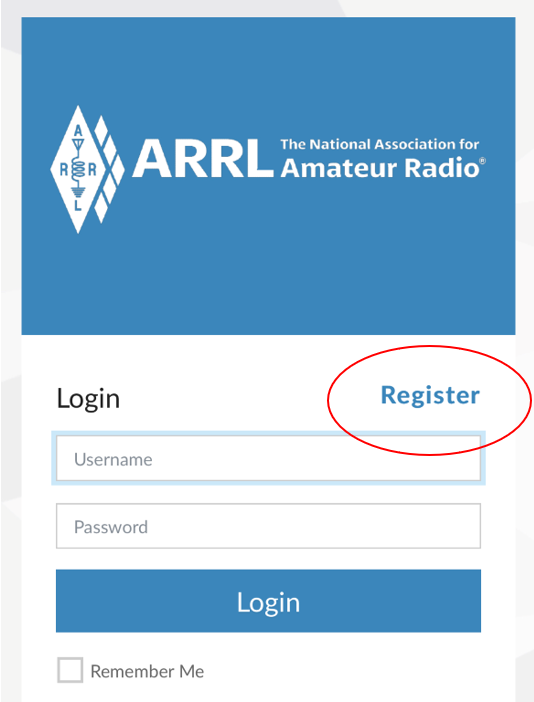
Following ARRL’s conversion to a new membership management system, these steps should be followed to sign in and access ARRL website features and services.
Thank you for your patience during the conversion!
If you need help, we’re here for you. Call us Monday – Thursday from 8 am – 7 pm (ET) and on Friday from 8 am – 5 pm (ET) or e-mail us at membership@arrl.org.
The FCC released a Public Notice on March 23, 2022, stating that the amateur radio application fees, including those associated with Form 605 application filings, would become effective on April 19, 2022. The Federal Communications Commission’s authority to impose and collect fees is mandated by Congress.
The $35 application fee, when it becomes effective on April 19, will apply to new, renewal, and modification applications that request a new vanity call sign. The fee will be per application.
Administrative updates, such as a change of name, mailing or email address, and modification applications to upgrade an amateur radio licensee’s operator class*, will be exempt from fees. (*this new information was just confirmed by FCC staff on Tuesday, March 29.)
VECs and Volunteer Examiner (VE) teams will not have to collect the $35 fee at exam sessions.
Once the FCC application fee takes effect, new applicants will pay the $15 exam session fee to the ARRL VE team as usual and pay the $35 application fee directly to the FCC by using the CORES FRN Registration system. VEC and VE team licensing procedures will not change.
When the FCC receives the examination information from the VEC, it will email a link with payment instructions to each qualifying candidate. The candidate will have 10 calendar days, from the date of the application file number being issued, to pay. After the fee is paid, and the FCC has processed an application, examinees will receive a second email from the FCC with a link to their official license or, in very rare instances, an explanation for why the application was dismissed or denied. The link will be valid for 30 days.
Per usual procedures, examinees that pass multiple exams at one session, will have one application transmitted to the FCC reflecting the highest-level license class earned. Again, our procedures will not change. The new license candidates will have an extra step before the license is issued. VE teams can point candidates to our FCC Application Fee webpage. Our new ARRL VEC CSCEs also include information about the application fee and points candidates to the webpage. The FCC rule pertaining to CSCEs will not change. CSCE credit will continue to be valid for 365 days, starting from the date of issuance.
For VE teams holding exam sessions the weekend before April 19, the FCC advised that applications not received by the FCC before April 19 will be subjected to the fee. The ARRL VEC urges teams to upload sessions via our documents upload page to get your sessions to us as quickly as possible. Assuming the FCC electronic batch filing (EBF) system is functioning properly on Monday, April 18, the VEC staff will work to get these to the FCC before April 19. Email the VEC department at VEC@arrl.org for the upload instructions.
Additionally, the FCC stated that the fee for applications processed and dismissed will not be refundable. This includes vanity requests where the applicant does not receive the requested call sign. However, returned applications that are missing information will not require an additional fee, if the missing information is submitted to the FCC within the proper amount of time.
Youth Licensing Grant Program
Anticipating the implementation of the fee in 2022, the ARRL Board of Directors, approved the ARRL Youth Licensing Grant Program in July 2021. Under the program, ARRL will cover a one-time $35 application fee for license candidates younger than 18-years old for tests administered under the auspices of the ARRL Volunteer Examiner Coordinator (ARRL VEC). Qualified candidates also would pay a reduced exam session fee of $5 to the ARRL VEC. ARRL is finalizing details for administering the program.
Further news and instructions will follow as the FCC releases them. Details for the ARRL Youth Licensing Grant Program will be posted when available. For additional information, visit the resources below.
The Federal Communications Commission (FCC) staff has clarified in response to an ARRL request that the new $35 application fee will not apply to most license modifications, including those to upgrade an Amateur Radio Licensee’s operator class and changes to club station trustees. The FCC staff explained that the new fees will apply only to applications for a new license, renewal, rule waiver, or a new vanity call sign. As previously announced, the new fees take effect on April 19, 2022.
“We are pleased that the FCC will not charge licensees the FCC application fee for license upgrade applications,” said ARRL Volunteer Examiner Coordinator (VEC) Manager Maria Somma, AB1FM. “While applicants for a new license will need to pay the $35 FCC application fee, there will be no FCC charge for future upgrades and administrative updates such as a change of mailing or email address. Most current licensees therefore will not be charged the new FCC application fee until they renew their license or apply for a new vanity call sign.”
ARRL previously reported that the new $35 application fee for Amateur Radio licenses will become effective on April 19, 2022. Further information and instructions about the FCC Application Fee are available from the ARRL VEC.
Danny Vierno, K1VWQ, writes on the Mt. Tom ARA Facebook page:
Our very own Western Mass Emergency Net, under ARES, is still looking for Net Control Operators sponsored by the ARRL heard right here on the W1TOM repeater system.
If you like checking into these nets, and would like to have them continue, please consider being a NCS. Your community and fellow ham will be glad you did.
Here is a wonderful video to help get you started if you do have an interest. Please let us know here, and we will get you in contact with the right people to get started.
The High-frequency Active Auroral Research Program (HAARP) facility in Alaska
The High-frequency Active Auroral Research Program (HAARP) will be supporting the NASA Sounding Rockets Program Office (SRPO) Ion-Neutral during Active Aurora (INCAA) mission by providing an additional non-co-located ground-based sensor. HAARP will concurrently be conducting an HF ocean scatter experiment. Actual transmit days and times are highly variable based on real-time ionospheric conditions and the Poker Flat Research Range launch window. The following schedule is subject to change, and all transmissions will take place on 6.8 MHz.
INCAA Launch Support Window
0500-0700 UTC, 24 March through 02 April inclusive
1230-1430 UTC, 03 April through 07 April inclusive
Ocean Scatter Window
0712-0722 UTC, 23 March
0819-0829 UTC, 24 March
0743-0753 UTC, 25 March
0707-0717 UTC, 26 March
0848-0858 UTC, 26 March
0731-0741 UTC, 27 March
0813-0823 UTC, 27 March
0737-0747 UTC, 28 March
0702-0712 UTC, 29 March
0626-0636 UTC, 30 March
0807-0817 UTC, 30 March
0732-0742 UTC, 31 March
0656-0706 UTC, 01 April
0620-0630 UTC, 02 April
0802-0812 UTC, 02 April
To request a HAARP QSL card, send reception reports to:
Emergency comms in the Azores
GB2RS News Team | March 25, 2022
The island of Sao Jorge in the Azores has suffered over 1,800 earthquakes in 48 hours.
The regional government has prepared contingency plans to protect the island’s population.
CT1END, the Emergency Communications Coordinator for Portugal, reports that a group of nine radio amateurs are working to support emergency communications locally and back to Portugal.
Radio amateurs are asked to steer clear of 3.75 to 3.76MHz overnight, 7.1 to 7.11MHz during the day, and around 14.300MHz for those amateurs outside the region.
All radio amateurs are encouraged to listen carefully and avoid causing any interference to emergency operations on those frequencies.
More details are available on the IARU Region 1 website.
It has been about 3 months since I became the ARRL New England Division Director. My focus has been on the following areas since January:
Building a relationship with and begin working with the ARRL Board Members, CEO, and Staff at ARRL Headquarters
Setting up communications processes with our division
Appointing four Assistant Directors to work on important issues and helping them to get their teams up and running
Working with the ARRL Foundation to get the new ARRL Club Grant Program ready to roll out
Enhancing focus within our division on legislation and regulations that impact Amateur Radio
All of this work would not be possible without the team of people who are working with me on these and other initiatives. We call ourselves the New England Director, Vice Director, Assistant Director (DVA) Team. I’d like to introduce you to the DVA Team:
Phil Temples, K9HI – New England Division Vice Director
Cory Golob, KU1U – Assistant Director, Emergency Communications and Public Service Activities
Rob Leiden, K1UI – Assistant Director, Spectrum Protection and Use
Anita Kemmerer, AB1QB – Assistant Director, Mentoring and Ham Development
Dan Norman, N0HF – Assistant Director, Youth Outreach and STEM Learning
I feel very fortunate to have this group of dedicated people working with me to serve New England Hams.
ARRL Update
David Minster, ARRL CEO has been hard at work filling key positions at ARRL HQ. David’s recent hires include:
I’ve had the opportunity to spend some time with Steve and Josh and they are both top-notch picks. They bring innovative thinking to their respective roles and they both are extremely enthusiastic and hard workers.
A number of important things got accomplished at the ARRL Board of Directors Meeting in January. You can find more about the details in the Board Meeting Notes here. The highlights include:
The ARRL Board of Directors recognizes clubs for long-standing ARRL affiliation and service to the Amateur Radio community. Along with the ARRL Board of Directors, I am pleased to recognize the following New England Clubs for their many years of ARRL affiliation and service:
Southeastern MA Amateur Radio Association – 75 Years
You can read about some of the many accomplishments of these clubs via the links above. We will be presenting each of these clubs with a plaque recognizing their long service and contributions at upcoming Hamfests and Club meetings.
Communications
The DVA Team believes that effective, 2-way communications are an essential part of serving members and Hams in New England. Our communications approach consists of three parts:
Quarterly Division Cabinet Meetings with Club Presidents, Section Managers and Field Staff Members, and other leaders
Triannual (every 4 months) Division Town Hall Meetings with all ARRL Members in New England
Frequent attendance at Club Meetings (at least 6 times a quarter for each DVA team member)
We held our first Cabinet Meeting on January 8th (see what was discussed here). Our next Cabinet Meeting is scheduled for April 16th. We are inviting members of the HQ Staff to these meetings so that they can share information on what they are doing and receive feedback directly from division leaders.
We held our first Town Hall Meeting on February 16th. Attendance was very good with over 200 in attendance. We provided an update on ARRL and New England Division activities and answered some 75 questions from the folks who attended. You can see what was discussed including a recording of the event here. We are planning to hold our next Town Hall Meeting in June.
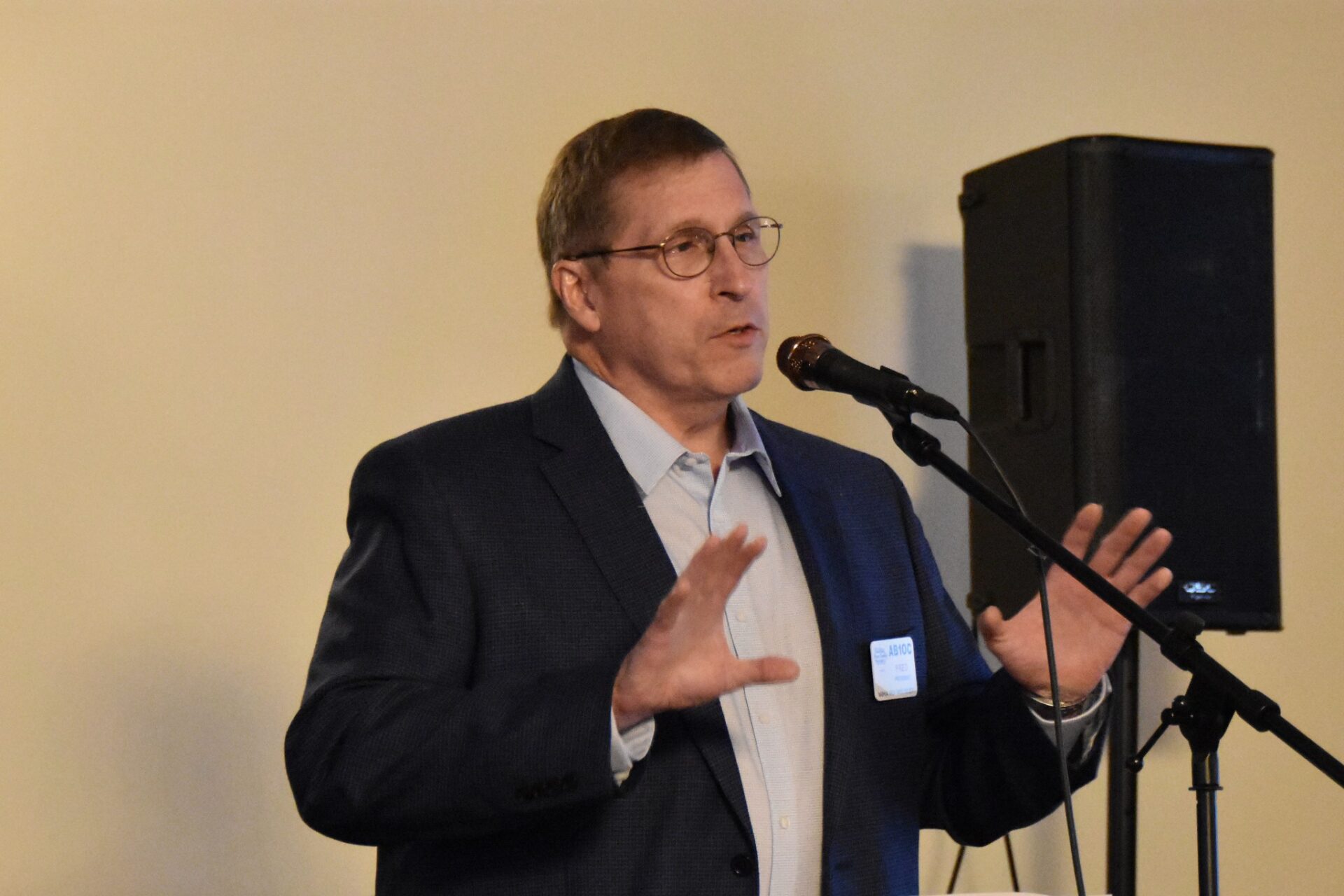
AB1OC Presentation at K1USN, March 5, 2022
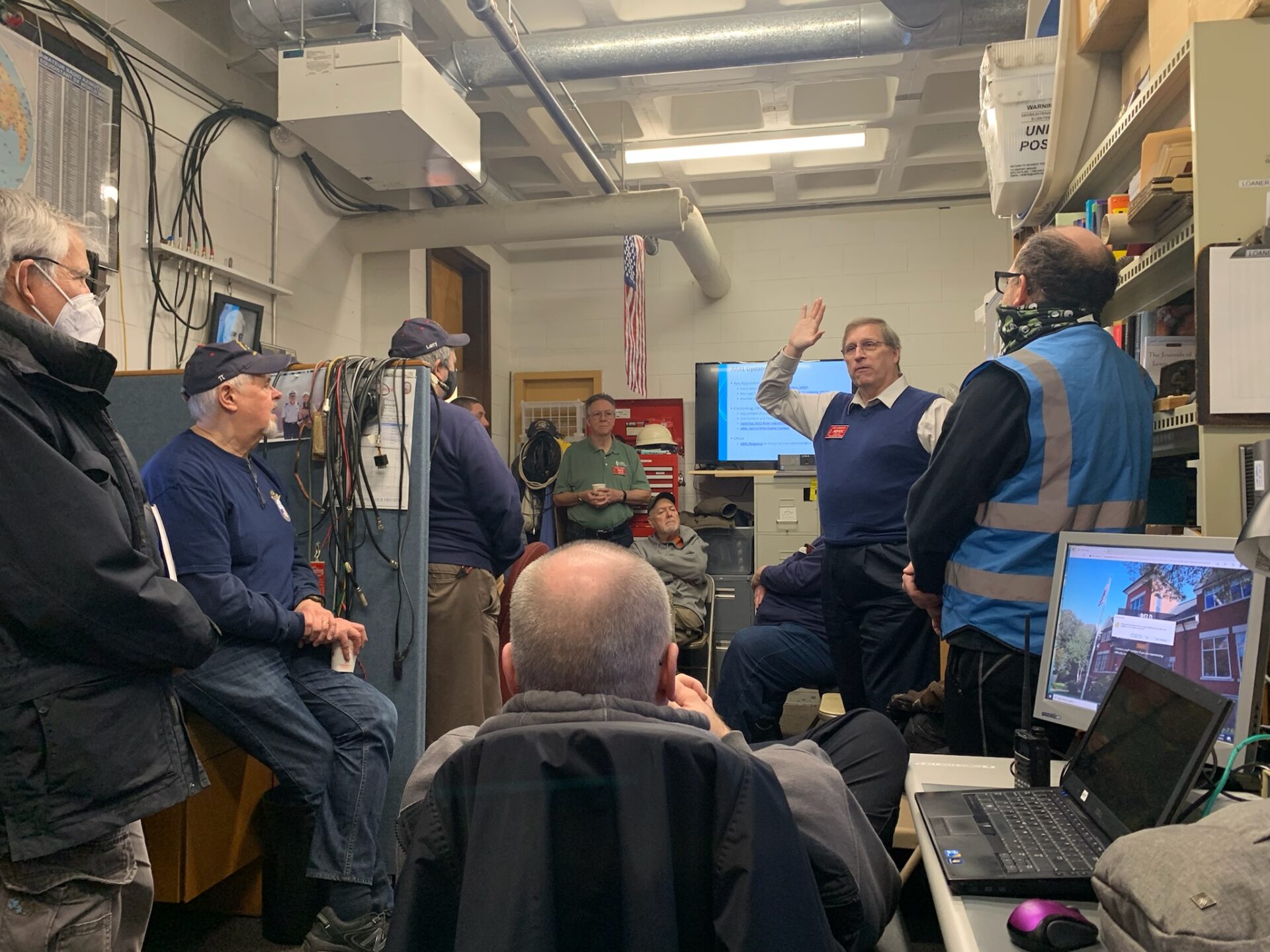
I’ve had a lot of fun attending some 11 club meetings so far this quarter. Our DVA team has also been attending many club meetings. We all find these meetings very helpful for keeping in touch with what Hams are doing in New England. We also want to be available to hear concerns and ideas that we can help with.
A special thanks to our Vice Director Phil, K9HI, who has built and continuously provides content for our division website. You can sign up to receive updates when we publish articles and information here by sharing your email address in the sidebar.
Assistant Director Teams
I heard concerns about many issues from ARRL Members and Hams in New England during the past 6 months. I have appointed four Assistant Directors (ADs) with the charter to bring people together to address some of the top concerns. Our initial Assistant Directors are:
Cory Golob, KU1U – Assistant Director, Emergency Communications and Public Service Activities
Rob Leiden, K1UI – Assistant Director, Spectrum Protection and Use
Anita Kemmerer, AB1QB – Assistant Director, Mentoring and Ham Development
Dan Norman, N0HF – Assistant Director, Youth Outreach and STEM Learning
You can learn more about our Assistant Directors here and here.
Our ADs have formed groups of folks interested in working together to solve problems and promote programs in their focus areas. Some of the work that is going on with the AD teams includes:
Sharing successful activities, programs, and tools (check out the AD pages on nediv.arrl.org)
Promoting activities and programs across the division
Encourage collaboration to create new and strengthen existing division-wide programs
Are you interested in being part of one or more of these teams? Check out the associated groups.io or contact our ADs at:
Focus Area
Assistant Director
eMail
groups.io
Emergency Communications and Public Service Activities
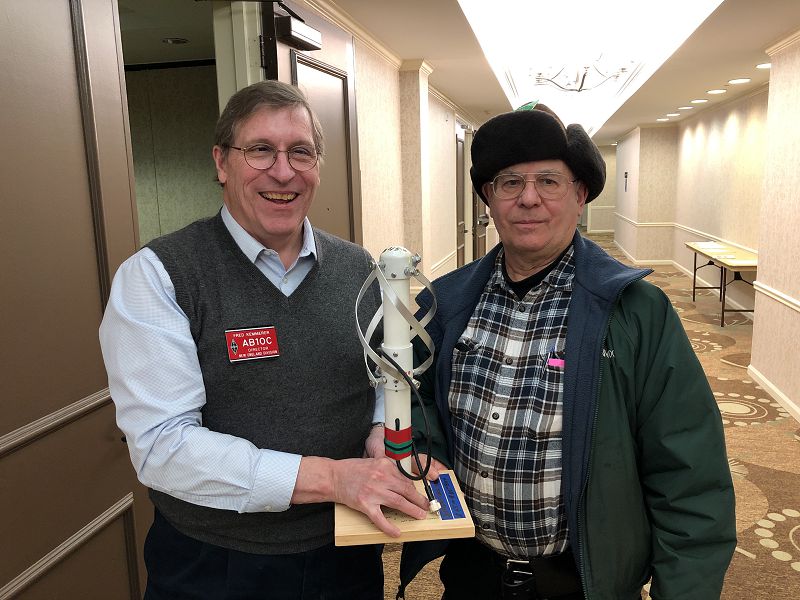
L-R: Fred Kemmerer, AB1OC, with Horace Clark, N1HC, at HAM-CON
I have been enjoying attending Hamfests and Conventions during the past few months. I’ve attended Hamcation in Florida in February, HAM-CON (the VT State Convention) in March, and I’m planning to attend the Maine State Convention in April. In addition to doing ARRL Forums and providing updates at these events, I’ve very much enjoyed talking with Hams to understand what is on their minds and to hear about projects and ideas to improve Amateur Radio and the ARRL.
Sanctioned ARRL Conventions will be listed in the ARRL Letter
You will receive ARRL prize certificates for use at your event
It’s a good idea to apply for sanctioning early as this process can help you to avoid scheduling conflicts by letting other groups know that you are holding your event on a specific date(s).
Club Grant Program
As many of you probably know, I have a passion for all that Amateur Radio Clubs provide. Clubs are the cornerstone of mentoring, many Amateur Radio activities, youth outreach projects, and many other important parts of Amateur Radio.
I made it a point to take on a role in the planning work for the forthcoming ARRL Club Grant Program. I have been working as part of a team of ARRL and ARRL Foundation directors and leaders to define how the Club Grant Program will work. The work is proceeding well and we are planning to begin rolling out the details of the program in April. Does your club have a project that would benefit the Amateur Radio community and the public as well as your club? You might want to consider applying for an ARRL Club grant.
With help from vigilant members in our division and Section Managers and State Government Liaisons in New England Sections, we have been working with Hams in New England to address pending legislation that would negatively impact Amateur Radio.
We are seeing bills emerge in several states in New England which are intended to protect people from health effects due to RF exposure from 5G commercial wireless networks. The most recent situation occurred with New Hampshire HB1644. This bill was written so broadly that it would have prohibited nearly all transmit antennas in residential areas. The bill would also establish a public registry where anyone who felt they were experiencing negative health effects due to RF exposure from nearby transmit antennas of any type could publicly identify the location of such antennas. With help from NH Section Manager Peter Stohrer, K1PJS, and NH State Government Liaison Bill Nelson, KA1PTW, we were able to mobilize NH Hams to file comments and testify at a hearing on this bill. At present, HB1644 has been sent back to Committee for further study and revision.
We have held meetings with the Section Managers and State Government Liaisons in New England to make them aware of the potential for similar bills to emerge in other states and to set up a process to share information and coordinate efforts to address such legislation going forward.
AB1OC’s Ham Radio Activities
It’s been a challenge during the past few months to find time to participate in the Amateur Radio activities that I enjoy. I’ve continued to support the Nashua Area Radio Society as Program Chairperson where I’m responsible for finding speakers for the club’s monthly Membership Meetings and Tech Night training sessions. I’ve also been part of a team that taught both Technical and General License Training classes where we helped a total of 16 people earn their Amateur Radio License or upgrade.
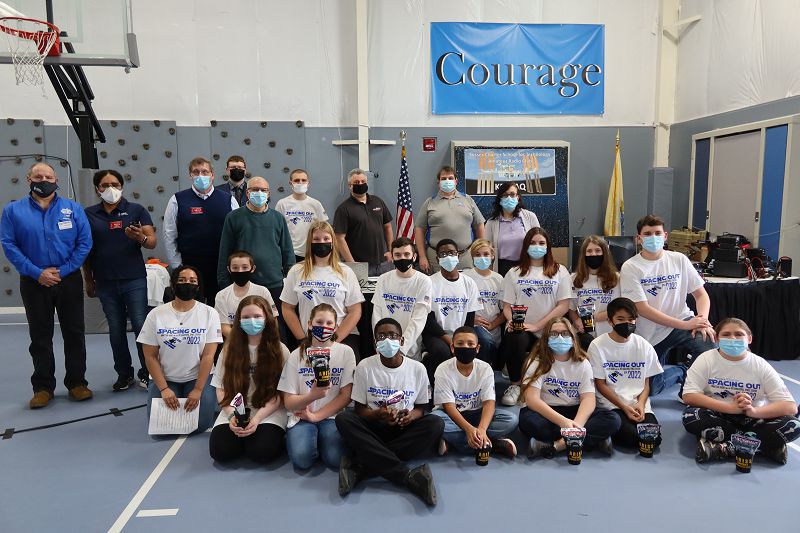
Sussex County Charter School ISS Contact
I’ve continued to be a mentor and ground station for the ARISS program. The school that I’ve been working with recently as their ARISS Mentor is located in Sussex County, NJ. They made contact with the ISS in February. I had the opportunity to join the group on contact day – it was an amazing experience!
I also had the opportunity to serve as the ARISS ground station for a group of scouts at a Jamboree in Victoria, Australia who made contact with astronaut Mark VandeHei, KG5GNP, on the ISS. You can read more about this contact here. I really enjoy working with young people around the world in this way to bring an amazing experience to them via Amateur Radio.
In between all of this, I’ve hosted some new Hams at our station to help them to get on the air and try various modes and bands. I’ve also been making contacts via Amateur Satellites and have been doing some meteor scatter and digital contacts on the 6m band. The 10 and 12-meter bands have been showing some decent DX activity on SSB and CW recently and I’ve had some fun there as well.
I hope to see you soon at a Hamfest, Club Meeting, Town Hall Meeting, or some other event in the near future. All the Best and 73,
Fred Kemmerer, AB1OC
ARRL New England Division Director
eMail: ab1oc@arrl.org
A Public Notice released by the Federal Communications Commission (FCC) on March 23, 2022, in MD Docket No. 20-270, announced that new application fees for Wireless Telecommunications Bureau applications will become effective on April 19, 2022. The new fees, mandated by Congress, apply to applications for Amateur Radio licenses including those associated with filing Form 605, the Amateur Operator/Primary Station Licensee Application.
Effective April 19, 2022, a $35 fee will apply to applications for a new Amateur Radio license, modification (upgrade and sequential call sign change), renewal, and vanity call signs.
Anticipating the implementation of the fee in 2022, the ARRL Board of Directors, at its July 2021 meeting, approved the “ARRL Youth Licensing Grant Program.” Under the program, ARRL will cover a one-time $35 application fee for license candidates younger than 18 years old for tests administered under the auspices of the ARRL Volunteer Examiner Coordinator (ARRL VEC). Qualified candidates also would pay a reduced exam session fee of $5 to the ARRL VEC. ARRL is finalizing details for administering the program.
ARRL had filed comments in opposition to imposing a fee on Amateur Radio license applications. The FCC initially proposed a higher, $50 fee. In a Report and Order (R&O), released on December 29, 2020, the amount was reduced — the FCC agreeing with ARRL and other commenters that its proposed $50 fee for certain amateur radio applications was “too high to account for the minimal staff involvement in these applications.”
ARRL Volunteer Examiner Coordinator (ARRL VEC) Manager Maria Somma, AB1FM, explained that all fees are per application. “There will be no fee for administrative updates, such as a change of mailing or email address. The fees will be the responsibility of the applicant regardless of filing method and must be paid within 10 calendar days of FCC’s receipt of the application. For applications filed by a VEC, the period does not begin until the application is received by the Commission, a ULS file number assigned, and an email sent by the FCC directly to the applicant.”
VECs and Volunteer Examiner (VE) teams will not collect the $35 fee at license exam sessions. New and upgrade candidates at an exam session will continue to pay the $15 exam session fee to the ARRL VE team as usual, and pay the new, $35 application fee directly to the FCC by using the CORES FRN Registration system (CORES – Login).
When the FCC receives the examination information from the VEC, it will email a link with payment instructions to each successful candidate who then will have 10 calendar days from the date of the email to pay. After the fee is paid and the FCC has processed an application, examinees will receive a second email from the FCC with a link to their official license or explanation of other action. The link will be good for 30 days.
Somma also explained that applications that are processed and dismissed will not be entitled to a refund. This includes vanity call sign requests where the applicant does not receive the requested call sign. “The FCC staff has suggested that applicants for vanity call signs should first ensure the call signs requested are available and eligible for their operator class and area, and then request as many call signs as the form allows to maximize their chances of receiving a call sign.”
Further information and instructions about the FCC Application Fee are available from the ARRL VEC at www.arrl.org/fcc-application-fee. Details for the ARRL Youth Licensing Grant Program will be similarly posted there, when available.
 Important Message from ARRL VEC
 From ARRL News: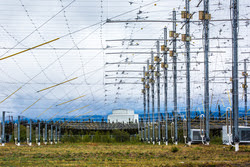
 From the Radio Society of Great Britain: