 The FCC has announced that rule changes detailed in a lengthy 2019 Report and Order governing RF exposure standards go into effect on May 3, 2021. The new rules do not change existing RF exposure (RFE) limits but do require that stations in all services, including amateur radio, be evaluated against existing limits, unless they are exempted. For stations already in place, that evaluation must be completed by May 3, 2023. After May 3 of this year, any new station, or any existing station modified in a way that’s likely to change its RFE profile – such as different antenna or placement or greater power – will need to conduct an evaluation by the date of activation or change.
The Report and Order can be found online in PDF format at, <https://docs.fcc.gov/public/attachments/FCC-19-126A1.pdf>.
“In the RF Report and Order, the Commission anticipated that few parties would have to conduct reevaluations under the new rules and that such evaluations will be relatively straightforward,” the FCC said in an April 2 Public Notice. “It nevertheless adopted a 2-year period for parties to verify and ensure compliance under the new rules.”
The Amateur Service is no longer categorically excluded from certain aspects of the rules, as amended, and licensees can no longer avoid performing an exposure assessment simply because they are transmitting below a given power level.
“For most amateurs, the major difference is the removal of the categorical exclusion for amateur radio, which means that ham station owners must determine if they either qualify for an exemption or must perform a routine environmental evaluation,” said Greg Lapin, N9GL, chair of the ARRL RF Safety Committee and a member of the FCC Technological Advisory Council (TAC).
“Ham stations previously excluded from performing environmental evaluations will have until May 3, 2023, to perform these. After May 3, 2021, any new stations or those modified in a way that affects RF exposure must comply before being put into service,” Lapin said.
The December 2019 RF Report and Order changes the methods that many radio services use to determine and achieve compliance with FCC limits on human exposure to RF electromagnetic fields. The FCC also modified the process for determining whether a particular device or deployment is exempt from a more thorough analysis by replacing a service-specific list of transmitters, facilities, and operations for which evaluation is required with new streamlined formula-based criteria. The R&O also addressed how to perform evaluations where the exemption does not apply, and how to mitigate exposure.
Amateur radio licensees will have to determine whether any existing facilities previously excluded under the old rules now qualify for an exemption under the new rules. Most will, but some may not.
“For amateurs, the major difference is the removal of the categorical exclusion,” Lapin said, “which means that every ham will be required to perform some sort of calculation, either to determine if they qualify for an exemption or must perform a full-fledged exposure assessment. For hams who previously performed exposure assessments on their stations, there is nothing more to do.”
The ARRL Laboratory staff is available to help amateurs to make these determinations and, if needed, perform the necessary calculations to ensure their stations comply. ARRL Laboratory Manager Ed Hare, W1RFI, who helped prepare ARRL’s RF Exposure and You book, explained it this way. “The FCC did not change any of the underlying rules applicable to amateur station evaluations,” he said. “The sections of the book on how to perform routine station evaluations are still valid and usable, especially the many charts of common antennas at different heights.” Hare said ARRL Lab staff also would be available to help amateurs understand the rules and evaluate their stations.”
RF Exposure and You is available in PDF format for free download from ARRL at, <http://www.arrl.org/files/file/Technology/RFsafetyCommittee/28RFSafety.pdf>.
ARRL also has an RF Safety page on its website at,<http://www.arrl.org/rf-exposure>.
The ARRL RF Safety Committee is working with the FCC to update the FCC’s aids for following human exposure rules – OET Bulletin 65 and OET Bulletin 65 Supplement B for Radio Amateurs. In addition, ARRL is developing tools that all hams can use to perform exposure assessments.

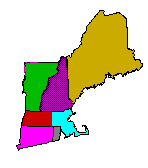 From wma.arrl.org:
 The
The  New Hampshire House Bill 313, “Relative to property restrictions on certain amateur radio antennas,” failed to reconsider by voice vote on April 7, 2021, according to
 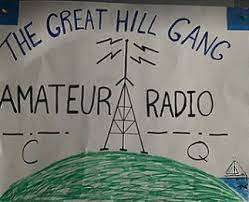 The “Great Hill Gang” will meet atop Great Hill in Weymouth, MA on Saturday, April 17, 2021. The group normally meets on the second Saturday of each month (weather allowing) at 9 AM.
 ARRL New England Division Director Fred Hopengarten, K1VR, has approved the application from organizers of the Hermon Hamfest in Hermon, Maine, to become a sanctioned ARRL Hamfest. The event, sponsored by the Pine State Amateur Radio Club will be held on June 5, 2021.