FCC Issues Enforcement Advisory: Radio Users Again Reminded Not to Use Radios in Crimes

FCC sealARLB013:

On April 20, the FCC’s Enforcement Bureau issued a new Enforcement Advisory, repeating the admonishments contained in a January Advisory that no licensee or user of the Amateur or Personal Radio Services may use any radio equipment in connection with unlawful activities of any nature.

The Enforcement Advisory can be found online in PDF format at https://docs.fcc.gov/public/attachments/DA-21-453A1.pdf.

The Commission specifically cautioned that individuals found to have used radios in connection with any illegal activity are “subject to severe penalties, including significant fines, seizure of the offending equipment, and in some cases, criminal prosecution.”

In addition, licensees should be aware that illegal operation in any service or band, including completely outside the amateur allocations, could potentially disqualify a person from holding any FCC license in any service, not just the Amateur Service.

Any amateur observing a suspicious infraction that might be of illegal or criminal nature should report it to their local law enforcement office or the FBI.

CT ARES Statewide Virtual Meeting, April 18, 2021

CT ARES logoConnecticut SEC Mike Walters, W8ZY, writes:

As I have been announcing for the last few weeks this weekend, April 18, there will be no radio nets. Instead we will have a statewide virtual meeting. The meeting will run from 8 till 9 PM […] You do not have to have a camera on this call as I will be presenting. I hope to have a good turnout as we will be talking about a planned statewide drill similar to the SET in conjunction with the Red Cross.

Please plan to attend.

[Contact Mike, W8ZY at w8zy -at- hotmail -dot- com for Microsoft Teams meeting information.]

MA Prepares for Thirteen Colonies Special Event Operation, July 1-7, 2021

13 Colonies US FlagFrom Franklin County (MA) Amateur Radio Club, KB1BSS:

Larry Krainson, W1AST, is looking for a few operators to run 13 colonies this year. The special event runs for 7 days from July 1 through July 7 and covers all modes.

We are Team K2H and are looking for operators living and operating in Massachusetts who are willing to sit and operate and make at least 500 Contacts in the 7 day period. You would be operating as call K2H.

It’s very exciting and fun. If you think you can commit the time, please contact him no later than the start of May.

Larry, W1AST
Team K2H – 13 Colonies Massachusetts State Manager

Worked All Vermont Award

Central VT ARC logoFrom the Central Vermont ARC website:

WORKED ALL VERMONT AWARD

PURPOSE: To encourage communications between amateur radio operators outside of Vermont, and amateurs in all counties of Vermont, and to encourage a high level of technical and operating skills from other amateurs in working all Vermont counties.

RULES: Work at least 13 out of the 14 Vermont counties. Any band or modes, or combination thereof, except repeaters. No restriction on time limits. (Vermont amateurs may qualify if they remain in one county.)

VERIFICATION: Send list of calls, dates, and counties worked, verified by two other licensed amateurs that have seen the QSL cards for the counties worked. Or include photocopies of the front and back of the QSL cards along with the aforementioned list. Do not send cards.

AWARD: A personalized certificate signed by the CVARC President.

COST: $5.00 to cover cost of certificate, postage and processing.

ADDRESS:
Central Vermont Amateur Radio Club, W1BD
P.O. Box 286
Montpelier, VT 05602

USS Squalus / W1S Special Event Operation, May 23, 2021

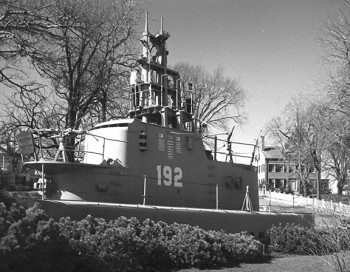
USS Squalus memorialThe submarine USS Squalus sank in the Gulf of Maine on May 23, 1939. Twenty-six of its crew were lost, but miraculously, 33 others were saved.

The Maine Ham Radio Society will be honoring the Squalus and its crew with a special –Remember The Squalus– event on the amateur radio airwaves on the 82nd anniversary of the tragic accident. Using the special FCC-issued callsign W1S, club members will take to the airwaves and make contacts nationally and around the globe, making other hams aware of the Squalus. Special certificates will be awarded to hams who successfully make contact with W1S that day, upon request. Members may sign up to operate during various time slots and band and mode of operation. Send N1EP an email n1ep@yahoo.com and he will send you a link to the signup schedule.


Three Fox Hunts Planned in Connecticut on April 17, 2021

There will be an unprecedented three live fox hunts in Connecticut on Saturday, April 17, 2021.  The hunts will be in Wallingford, Norwich, and Waterford.

In Wallingford:

Saturday will be another good day for a fox hunt. The three fox transmitters will be switched on somewhere in Wallingford at 11 AM and plan to stop at 12:30. We’ll be using what have become our standard frequencies.  There will be a 1 watt signal continuously on 146.565MHz.  It will make a short beep every three seconds and will ID in Morse Code every minute. 

The 10mW transmitter is on 147.455MHz and will beep every second and will ID in Morse Code every minute.

The 1mW transmitter is on 146.290MHz and will beep every three seconds. 

All three transmitters are planned to run continuously.

Good Luck,

Dave NZ1J 

In Norwich:

We will have a live fox hunt beginning at 1 PM on Saturday, April 17.  Weather forecast is for sunshine and 55 degrees!  Start from anywhere in Norwich, CT – if you wish to gather at a common place when starting the hunt, then I suggest doing so at the Route 82 parking lot on Laura Blvd (map below).  I will be hiding in the area defined by the map below.  You can also download a map that could be useful (for those wishing to use a paper map) at this link: https://d85bc6ea86296c327d7f-fc14fae93feb1cf1ff31873061ee8f7d.ssl.cf1.rackcdn.com/62/1641/Norwich2016Reduced.pdf.  Page 2 has a complete map of Norwich, which I think you will find helpful.

There will be three transmitters running, on the following frequencies:

146.190-146.335 (1 mW transmitter – can be heard within ca. 300 feet of the fox) – this transmitter will run continuously.  Listen for a regularly beeping tone with periodic CW id (KE1IU).  I will announce the frequency the day of the hunt, as the transmitter seems to settle in a different place each time.

145.910 (25 mW transmitter – can be heard within ca. 1 mile of the fox) – this transmitter will run continuously.  Listen for a regularly beeping tone with periodic CW id (KE1IU).

146.550 (0.5 W transmitter – can be heard within a couple miles of the fox)  – this transmitter will run for 1 minute on and ~5 seconds off.   Listen for a regularly beeping tone with periodic CW id (KE1IU). The power level is a bit lower because the rig I am using has only two power levels: 0.5 W and 5 W.  It runs too hot for continuous duty at 5W.

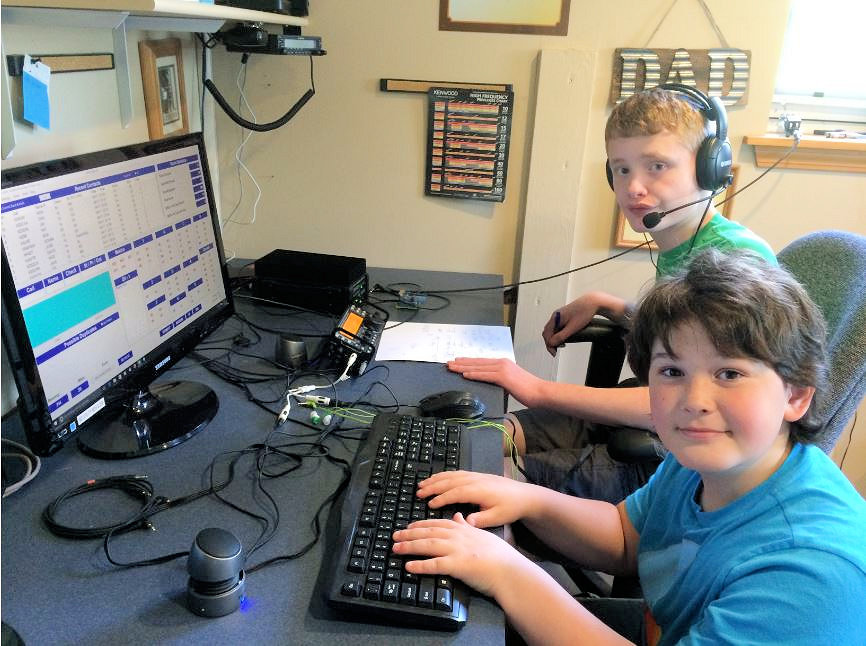
These transmitters will be hidden – possibly by some junior hams at the site (KC1IVR and KC1LXO) – so you can hunt for them when you arrive.  

In addition, I will have a mobile rig tuned to the N1NW repeater (146.730 MHz, PL 156.7), so you can track me from the input.  Listen for me on 146.130.  I will transmit on request, and we will also use this frequency for hints.

All hunters should check in so that I can end the hunt when the last person has found me.  Also, because we are still following pandemic protocol in the State of CT, I will take this opportunity to remind all of you to wear a mask when exiting your vehicle in the vicinity of the fox lair, and please maintain social distancing of >6 feet when at the site.

Let me know if you have any questions.

Many thanks,

-Mark  KE1IU

In Waterford:

The Tri-City ARC will be holding a fox hunt next Saturday at 1 PM. Check-in will be on the Salem Repeater at 12:50 PM.  Starting Point is the Dick’s Sporting Goods parking lot, in Waterford, CT. The fox is located within 8 miles of the starting point.

The Fox will transmit on 146.55 MHz every 5 minutes starting at 1 PM.

This is a basic fox hunt with only one fox. For folks that are new to fox hunting, try to work together and share your findings. I will monitor the Salem repeater and provide hints, if necessary.

W1RPQ

SSB ARRL Rookie Roundup, Sunday, April 18, 2021

From the ARRL Letter:

The SSB ARRL Rookie Roundup is Sunday, April 18, 1800 – 2359 UTC. 

The Rookie Roundup is aimed at hams licensed for 3 years or less. Rookies make as many contacts as possible during this 6-hour event. Rookies work everyone, and non-Rookies work only Rookies. Stations exchange each other’s call signs, first names, a two-digit year, and state (US or Mexican), Canadian province, or DX. Rookies can enter as a Single Operator or invite Rookie friends over and operate as Multioperator. Up to five Single Operator Rookies can also enter from their individual stations and submit their total score as a team. This is a great way for clubs to get newer members on the air, and the perfect opportunity to be a mentor to new licensees. Seasoned operators can join in the fun by calling “CQ Rookies.” This year, the Rookie Roundup takes place during World Amateur Radio Day. Use the opportunity to wish participants “Happy World Amateur Radio Day” on the air. Logs are due on April 21 (within 72 hours after the event). No late entries will be accepted. Complete rules, logging sheets, and links for submitting your score are on the Rookie Roundup web page.

New England Wireless and Steam Museum featured on Rhode Island PBS, April 16, 2021

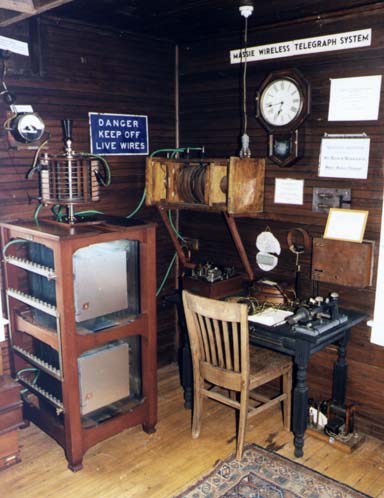
Massie Wireless Station “PJ”

PBS’ “Treasures Inside the Museum,” April 16 at 8:30 PM EDT

 
This episode features the New England Wireless and Steam Museum in East Greenwich, Rhode Island, home to a vast collection of working stationary steam engines that once powered New England through the industrial age. The museum also collects relics from the dawn of wireless communication, including the Massie Wireless Station – once used by the Providence Journal to send news back and forth from Point Judith to Block Island.
 
WSBE Rhode Island PBS transmits over the air in high definition on digital 36.1; Cox 08 / 1008HD, Verizon FiOS 08 / 508HD, and Full Channel 08; Comcast 819HD and Verizon FiOS 18 / 518HD in MA; DirecTV 36, Dish Network 36.
 

ARLB011: Updated Radio Frequency Exposure Rules Become Effective on May 3

FCC sealThe FCC has announced that rule changes detailed in a lengthy 2019 Report and Order governing RF exposure standards go into effect on May 3, 2021. The new rules do not change existing RF exposure (RFE) limits but do require that stations in all services, including amateur radio, be evaluated against existing limits, unless they are exempted. For stations already in place, that evaluation must be completed by May 3, 2023. After May 3 of this year, any new station, or any existing station modified in a way that’s likely to change its RFE profile – such as different antenna or placement or greater power – will need to conduct an evaluation by the date of activation or change.

The Report and Order can be found online in PDF format at, <https://docs.fcc.gov/public/attachments/FCC-19-126A1.pdf>.

“In the RF Report and Order, the Commission anticipated that few parties would have to conduct reevaluations under the new rules and that such evaluations will be relatively straightforward,” the FCC said in an April 2 Public Notice. “It nevertheless adopted a 2-year period for parties to verify and ensure compliance under the new rules.”

The Amateur Service is no longer categorically excluded from certain aspects of the rules, as amended, and licensees can no longer avoid performing an exposure assessment simply because they are transmitting below a given power level.

“For most amateurs, the major difference is the removal of the categorical exclusion for amateur radio, which means that ham station owners must determine if they either qualify for an exemption or must perform a routine environmental evaluation,” said Greg Lapin, N9GL, chair of the ARRL RF Safety Committee and a member of the FCC Technological Advisory Council (TAC).

“Ham stations previously excluded from performing environmental evaluations will have until May 3, 2023, to perform these. After May 3, 2021, any new stations or those modified in a way that affects RF exposure must comply before being put into service,” Lapin said.

The December 2019 RF Report and Order changes the methods that many radio services use to determine and achieve compliance with FCC limits on human exposure to RF electromagnetic fields. The FCC also modified the process for determining whether a particular device or deployment is exempt from a more thorough analysis by replacing a service-specific list of transmitters, facilities, and operations for which evaluation is required with new streamlined formula-based criteria. The R&O also addressed how to perform evaluations where the exemption does not apply, and how to mitigate exposure.

Amateur radio licensees will have to determine whether any existing facilities previously excluded under the old rules now qualify for an exemption under the new rules. Most will, but some may not.

“For amateurs, the major difference is the removal of the categorical exclusion,” Lapin said, “which means that every ham will be required to perform some sort of calculation, either to determine if they qualify for an exemption or must perform a full-fledged exposure assessment. For hams who previously performed exposure assessments on their stations, there is nothing more to do.”

The ARRL Laboratory staff is available to help amateurs to make these determinations and, if needed, perform the necessary calculations to ensure their stations comply. ARRL Laboratory Manager Ed Hare, W1RFI, who helped prepare ARRL’s RF Exposure and You book, explained it this way. “The FCC did not change any of the underlying rules applicable to amateur station evaluations,” he said. “The sections of the book on how to perform routine station evaluations are still valid and usable, especially the many charts of common antennas at different heights.” Hare said ARRL Lab staff also would be available to help amateurs understand the rules and evaluate their stations.”

RF Exposure and You is available in PDF format for free download from ARRL at, <http://www.arrl.org/files/file/Technology/RFsafetyCommittee/28RFSafety.pdf>.

ARRL also has an RF Safety page on its website at,<http://www.arrl.org/rf-exposure>.

The ARRL RF Safety Committee is working with the FCC to update the FCC’s aids for following human exposure rules – OET Bulletin 65 and OET Bulletin 65 Supplement B for Radio Amateurs. In addition, ARRL is developing tools that all hams can use to perform exposure assessments.